---
title: Jira connector and action
description: The Jira connector uses the REST API v2 to create Atlassian Jira issues. Jira Cloud and Jira Data Center are supported. Jira on-premise deployments are...
url: https://docs-v3-preview.elastic.dev/elastic/kibana/pull/280898/reference/connectors-kibana/jira-action-type
products:
- Kibana
applies_to:
- Elastic Cloud Serverless: Generally available
- Elastic Stack: Generally available
---
# Jira connector and action
The Jira connector uses the [REST API v2](https://developer.atlassian.com/cloud/jira/platform/rest/v2/) to create Atlassian Jira issues.
## Compatibility
Jira Cloud and Jira Data Center are supported. Jira on-premise deployments are not supported.
## Create connectors in Kibana
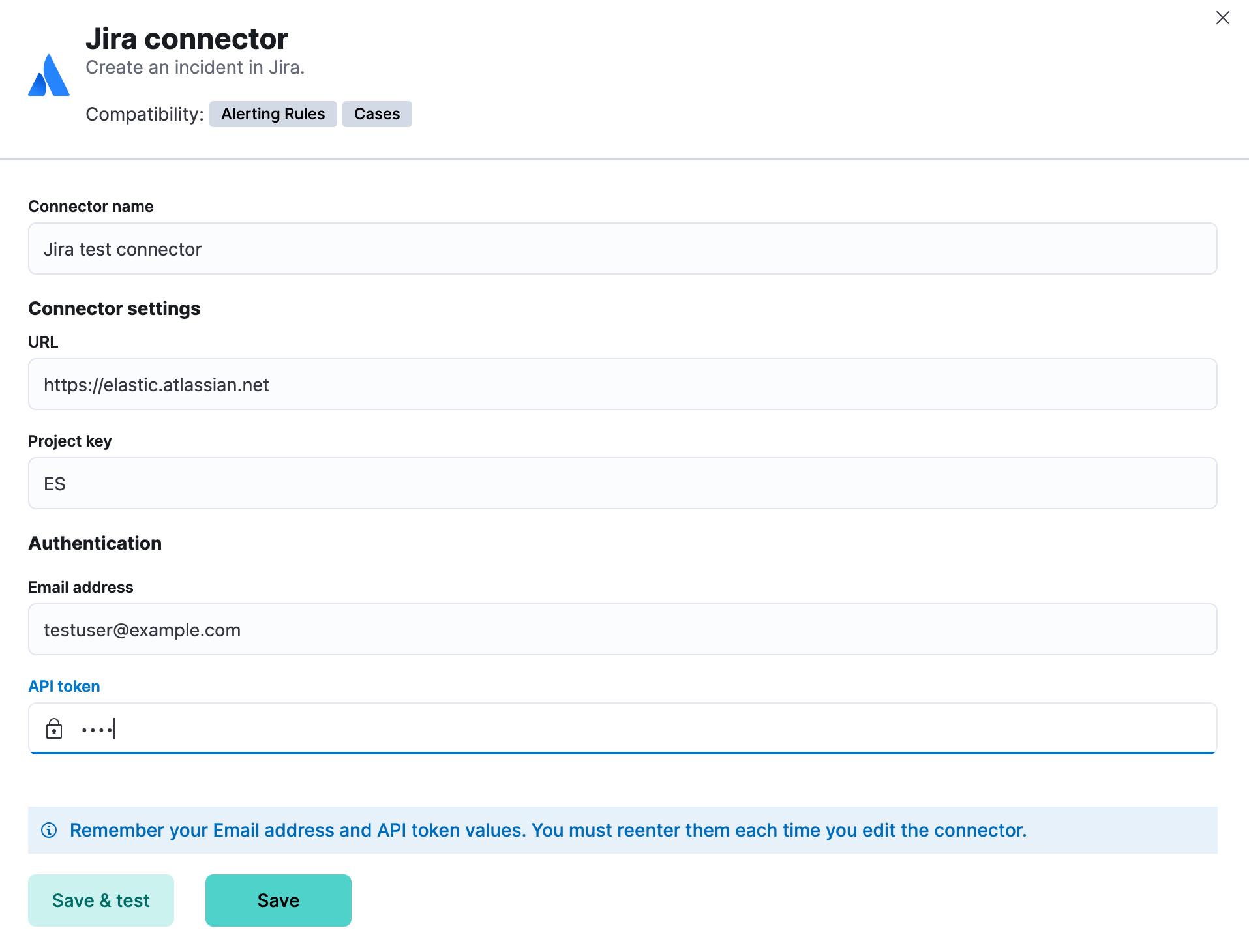
You can create connectors in **Stack Management > Connectors** or as needed when you're creating a rule. For example:
### Connector configuration
Jira connectors have the following configuration properties:
The name of the connector.
Jira instance URL.
Jira project key.
The account email for HTTP Basic authentication.
Jira API authentication token for HTTP Basic authentication. For Jira Data Center, this value should be the password associated with the email owner.
## Test connectors
You can test connectors as you're creating or editing the connector in Kibana. For example:
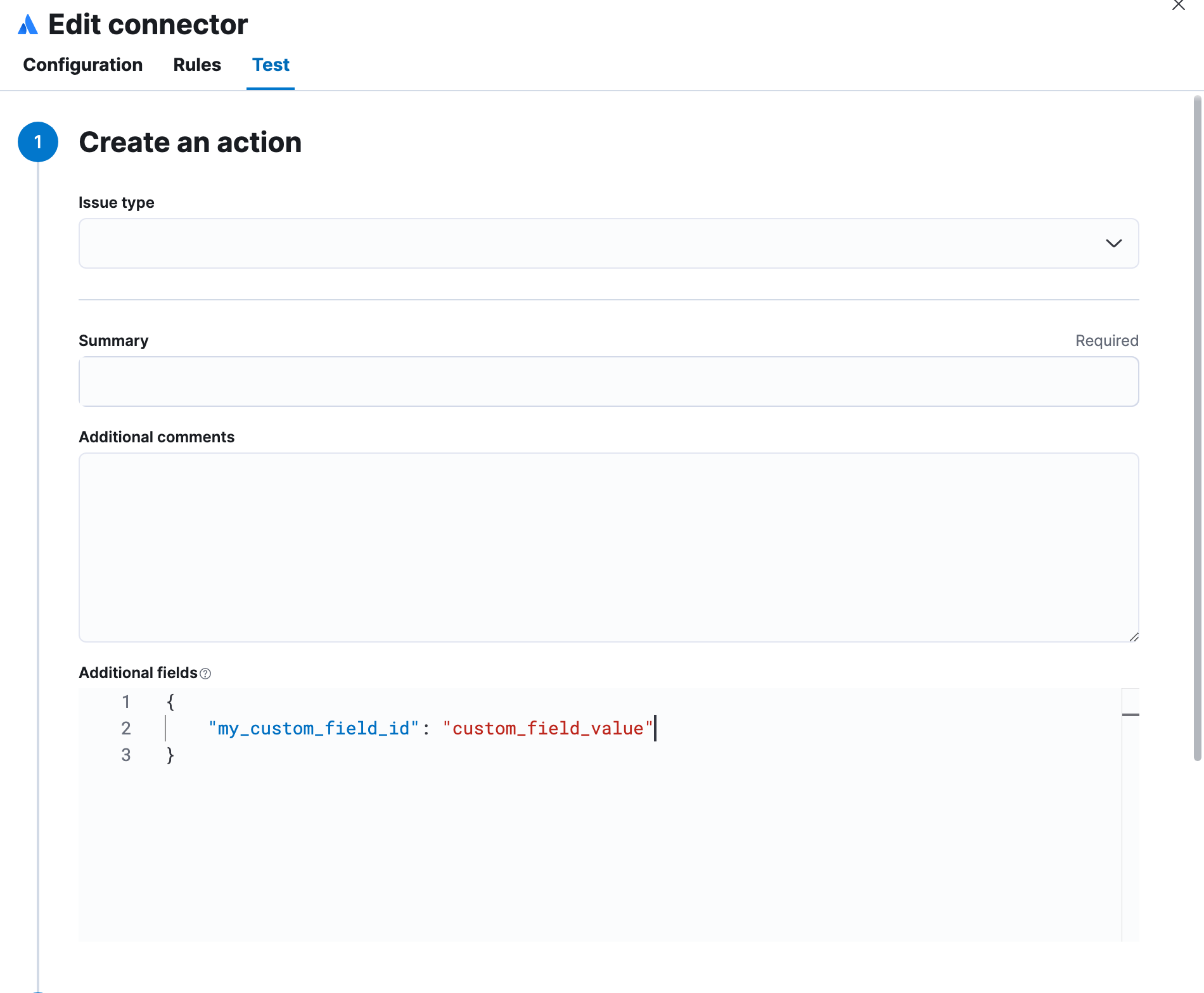
Jira actions have the following configuration properties.
The type of the issue.
The priority of the incident.
The labels for the incident.
A title for the issue, used for searching the contents of the knowledge base.
The details about the incident.
The ID or key of the parent issue. Only for `Subtask` issue types.
Additional information for the client, such as how to troubleshoot the issue.
An object that contains custom field identifiers and their values. These custom fields must comply with your Jira policies; they are not validated by the connector. For example, if a rule action does not include custom fields that are mandatory, the action might fail.
## Connector networking configuration
Use the [Action configuration settings](/elastic/kibana/pull/280898/reference/configuration-reference/alerting-settings#action-settings) to customize connector networking configurations, such as proxies, certificates, or TLS settings. You can set configurations that apply to all your connectors or use `xpack.actions.customHostSettings` to set per-host configurations.