---
title: Swimlane connector and action
description: The Swimlane connector uses the Swimlane REST API to create Swimlane records. You can create connectors in Stack Management > Connectors or as needed...
url: https://docs-v3-preview.elastic.dev/elastic/kibana/pull/280898/reference/connectors-kibana/swimlane-action-type
products:
- Kibana
applies_to:
- Serverless Observability projects: Generally available
- Serverless Security projects: Generally available
- Elastic Stack: Generally available
---
# Swimlane connector and action
The Swimlane connector uses the [Swimlane REST API](https://swimlane.com/knowledge-center/docs/developer-guide/rest-api/) to create Swimlane records.
## Create connectors in Kibana
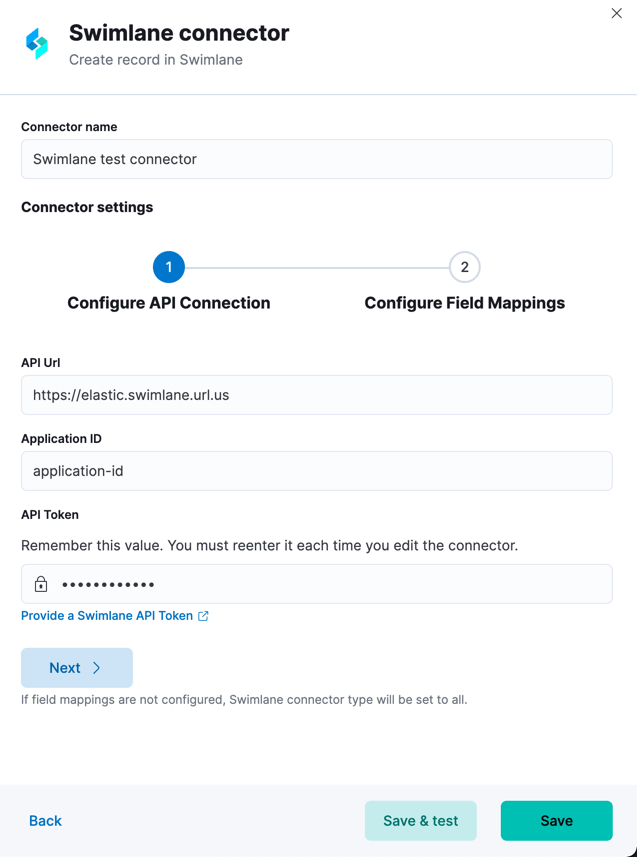
You can create connectors in **Stack Management > Connectors** or as needed when you're creating a rule. For example:
### Connector configuration
Swimlane connectors have the following configuration properties:
The name of the connector.
Swimlane instance URL.
Swimlane application ID.
Swimlane API authentication token for HTTP basic authentication.
## Test connectors
You can test connectors as you're creating or editing the connector in Kibana. For example:
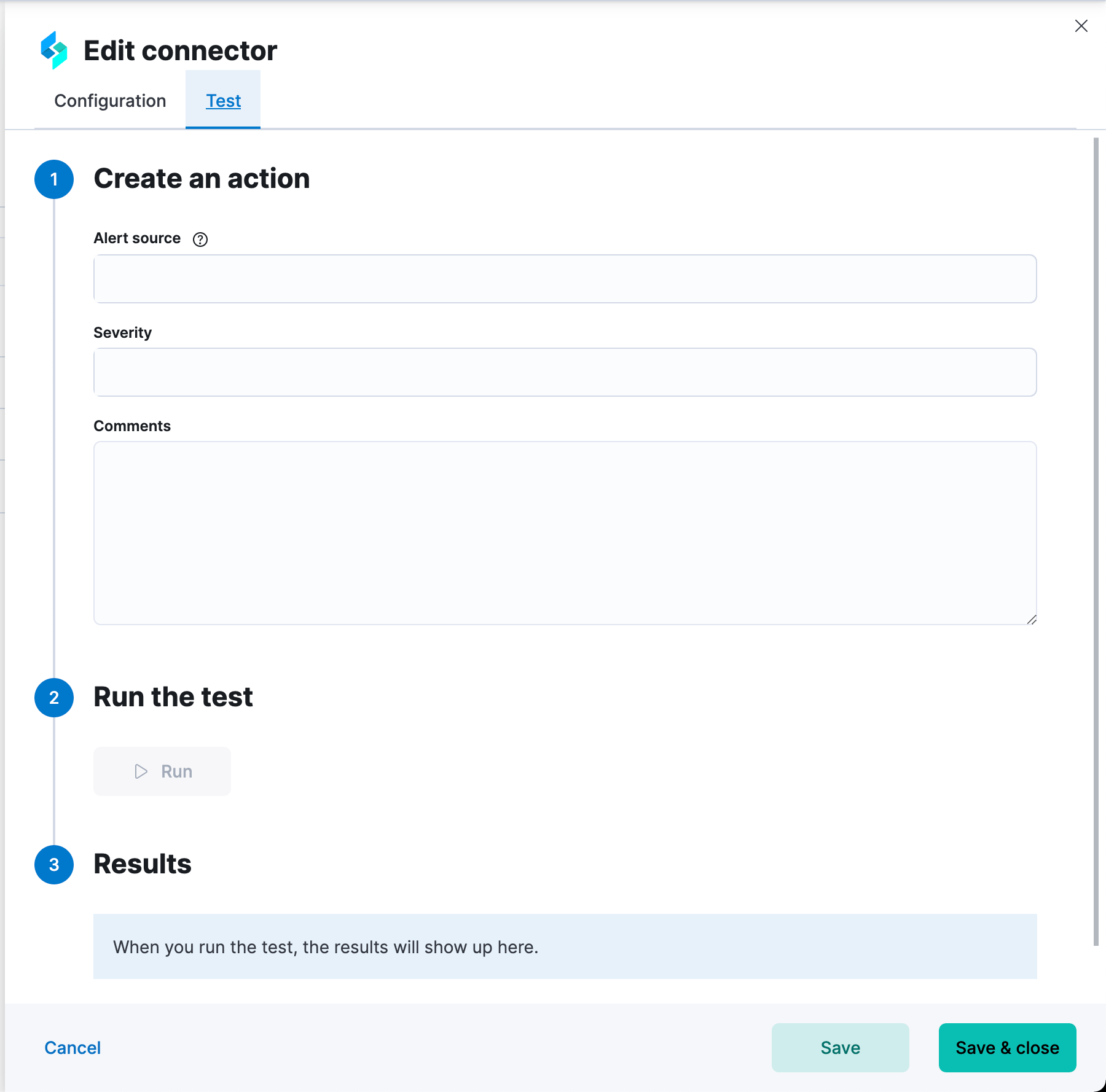
Swimlane actions have the following configuration properties.
Additional information for the client, such as how to troubleshoot the issue.
The severity of the incident.
Alert ID and Rule Name are filled automatically. Specifically, Alert ID is set to `{{alert.id}}` and Rule Name to `{{rule.name}}`.